
Skip to content Skip to footer

Energy Storage /

Battery Energy Storage Systems (BESS) /

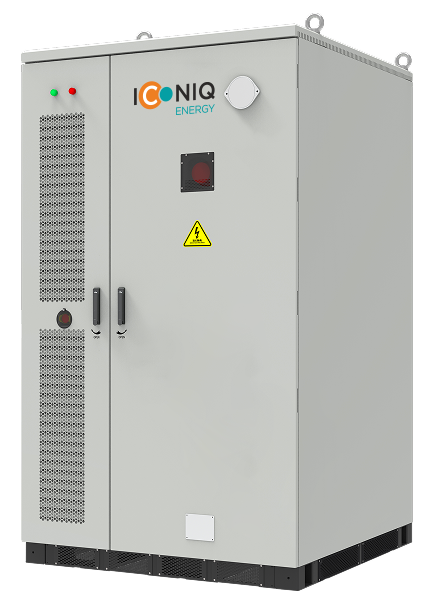
ICE 215KW - 418 kWh

Utility - Battery Energy Storage Systems

High-Performing Intelligent Energy Storage Solutions

INDUSTRY APPLICATIONS OF C&L ENERGY STORAGE SYSTEMS

Manufacturing facilities

High-load machinery and sensitive processes require constant, reliable energy. A BESS helps avoid costly production stops by covering peak demand periods and ensuring backup power during grid instability.

Warehousing and logistics centers

By lowering energy costs and enabling efficient EV fleet charging, industrial energy storage solutions offer real value for large-scale logistics sites. A BESS supports overnight operations, peak-load smoothing, and rapid charging during high-demand periods.

Commercial buildings & RWA's

Retail chains, data centers, and office buildings can use commercial battery storage solutions to stabilize energy consumption, reduce peak tariffs, and support sustainability targets by integrating solar or other renewables.

Fleet depots / Highways/Railways

Electrified fleets need dependable charging infrastructure. A BESS delivers fast, efficient charging while easing demand on the local grid - making it ideal for truck, bus, and delivery depots.

ADVANTAGES OF BESS FOR COMMERCIAL AND INDUSTRIAL SITES

Revenue generation & optimizing operating costs

Store energy when rates are low and use it when demand and pricing spike, manage your load profile and enable grid market revenue generation.

Improved energy reliability

Grid disruptions don't have to stop operations. A BESS provides reliable backup power to critical systems, helping minimize downtime and reduce risk.

Safety and security

Advanced safety features such as fire prevention, liquid cooling, PFAS free direct injection fire suppression, and robust oybersecurity.

Scalability and future-proofing

Modular system design allows for easy capacity expansion to meet growing power needs, future-proofing your investment against market changes.

All-in-one design & turnkey solutions

A turnkey BESS solution helps optimize the full system potential and offers hassle free setup, or it can be delivered as a standalone product.

Environmental and Grid Sustainability

Enabling cost-effective, fast, and sustainable charging solutions, while also supporting grid stability and integrating renewable energy sources.

PRODUCT FEATURES

Comprehensive Safety

Proactive Alert Cell-level monitoring, early warning
Multi-Level Protection Pack, cluster, cabin isolation
Fire & Explosion Prevention Triple fire protection, vent design

High Efficiency

High Conversion System efficiency >=87%
Al-Powered Scheduling Optimized energy dispatch
Maximized ROl Peak shaving & other revenue streams

Simple 0&M

Cloud Diagnosis Fault identification in seconds
Remote Management Cloud-based monitoring & control
24/7 technical supporting Expert team always on watch

Easy Deployment

Plug & Play Pre-installed, powered on arrival
Time Saving Drastically reduces installation time
Scalable Design Modular expansion as needed
PRODUCT PARAMETERS

Cell type Lithium iron phosphate 3.2 V / 314 Ah
Charge-discharge conversion time <50 ms
Battery Pack capacity and configuration 1P5s 5 * 8
Total Battery Capacity 418 kWh
Battery Voltage Range 1040VDC – 1518.4VDC
Rated output voltage 690/800 Vac
Rated output frequency 50 ~ 60 Hz
AC rated power 215 kW
Weight 3.8t
Dimensions (L*D*H) 1420(W) * 1350(D) * 2350(H) mm
Operating temperature -40°C ~ +60°C
Protection level IP66 (battery Pack), IP54 (equipment compartment), PCS(IP66)
Cooling concept Intelligent liquid cooling
PRODUCT SPECIFICATIONS
+ DC side parameters
Parameter ICE 215KW – 418 kWh
Battery capacity 418 kWh
System Configuration 1P52S * 8
Cell type Lithium iron phosphate 3.2 V / 314 Ah
Battery voltage range 1040 VDC ~ 1518.4 VDC
PACK protection level IP66 (battery Pack), IP54 (equipment compartment), PCS(IP66)
+ AC side parameters
Parameter ICE 215KW – 418 kWh
AC rated power 215 kW
Rated output voltage 690/800 (-15% ~ 15%) Vac
Rated grid frequency 50 ~ 60 Hz
Charge-discharge conversion time <50 ms
+ System parameters
Parameter ICE 215KW – 418 kWh
Cycle count 8000 ~ 10000 cycle
Maximum system efficiency Annual average exceeds 88%, with maximum exceeding 89%
Battery cell cooling method Intelligent liquid cooling
Operating temperature range -40℃ ~ +60℃
Operating humidity range 0~100% RH
Corrosion resistance level C4 (C5 Customisable)
Protection level IP66 (battery Pack) / IP54 (equipment compartment) / PCS(IP66)
Fire protection system PACK-level precision fire suppression + compartment-level fire suppression (aerosol) + water fire suppression
Overload capacity 1.1 times (grid-connected)
Product dimensions (W*D*H) 1420(W)*1350(D)*2350(H)mm
Equipment weight 3.8 t
FAQ ABOUT BESS
+ Why do I need a BESS?

BESS are very flexible and can support and solve many challenges regarding electrification, such as storing intermittent renewable energy or reducing power peaks in constrained grids.

For example, BESS might primarily support electric vehicle charging in a weak grid. But it can also provide additional services like grid support, leading to revenue opportunities, or CO2 optimization of your local energy use.

So, a BESS can provide both revenue opportunities and cost and emission savings.

+ What does it cost to buy and install a BESS?

The system and installation cost depend on your particular needs, the site and the environment in which it should be placed.

Please get in touch with us for a quote.

+ What is the payback time for an investment in a BESS?

The payback time depends on your use case, priorities, and location. A typical business case currently shows around five years.

Please contact us for a more specific analysis.

+ Is a BESS compatible with all grids?

Our products are compliant with EU standards and can be connected to standard 3-phase 400V grids.

+ Which applications can BESS charge?

BESS can charge all electric applications on site and is brand agnostic, meaning it supports all vehicle types.

+ What does second life batteries mean?

As electrification grows, used batteries still have valuable potential. These are reused and repurposed to support charging solutions and reduce carbon footprint.